The Gold Standard: .22 LR
The most common rimfire was not the first; that title belongs to another (see below). The LR, first a black powder round, was created by the J. Stevens company in 1887. Some 137 years later, the rest is history.

Related: The Best .22 Long Rifle Ammunition
The .22 LR is available on every conceivable type of firearm action, long guns, handguns, and even useful as a shotshell. One can hardly own firearms without having at least one .22 LR. They’re useful for everything from the most affordable plinking to small game hunting, training, suppressed shooting, and even competitions.
The Elders: .22 Short & .22 Long
Long overshadowed by the .22 LR, the Short was once a star. In fact, it holds the title of America’s oldest commercial (self-contained, at least) metallic cartridge, in production since 1857. Though now long overshadowed by pretty much everything else on this list, it nonetheless remains an especially quiet, close-range option to this day.

Likewise, the .22 Long’s lineage is a lengthy one, dating to the early 1870s. In black powder days, the Long was a real contender, but once smokeless powder took over, it quickly faded. Nonetheless, both .22 Short and Long rounds are currently produced, albeit in more limited quantities than their LR brethren.
Many guns – though few semi-autos – will fire .22 Short, Long, and Long Rifle, and are marked accordingly. There’s nothing wrong with having those options, and because of both that and a sense of nostalgia, we always keep a few boxes of CCI Shorts and Longs on the ammo shelf.
The Magnum: .22 WMR
Known by many names and abbreviations, most commonly .22 WMR or .22 Mag, the extended cartridge represents a serious increase in power, muzzle velocity, and overall performance when compared to the Long Rifle. In terms of age, the .22 Winchester Magnum Rimfire is relatively young, not born until 1959.

It shows off a casing that is not only longer but also of larger diameter than the LR. In fact, the .22 WMR is tipped with a .224-diameter bullet, the same size used in the beloved .223 Rem/5.56 NATO, albeit on the lighter end of the scale.
Related: Handheld Power Plinkers – Top .22 WMR Handguns
A wider range of projectile types – including a slew of jacketed and ballistic tip options in addition the expected SPs and HPs – along with expanded bullet weight ranges from 30 to 50 grains, give hunters far more options over the .22 LR. Add all those metrics together, and the sum makes the .22 Magnum more capable on everything from pests to coyotes (under the right circumstances) and with an extended range, to boot.
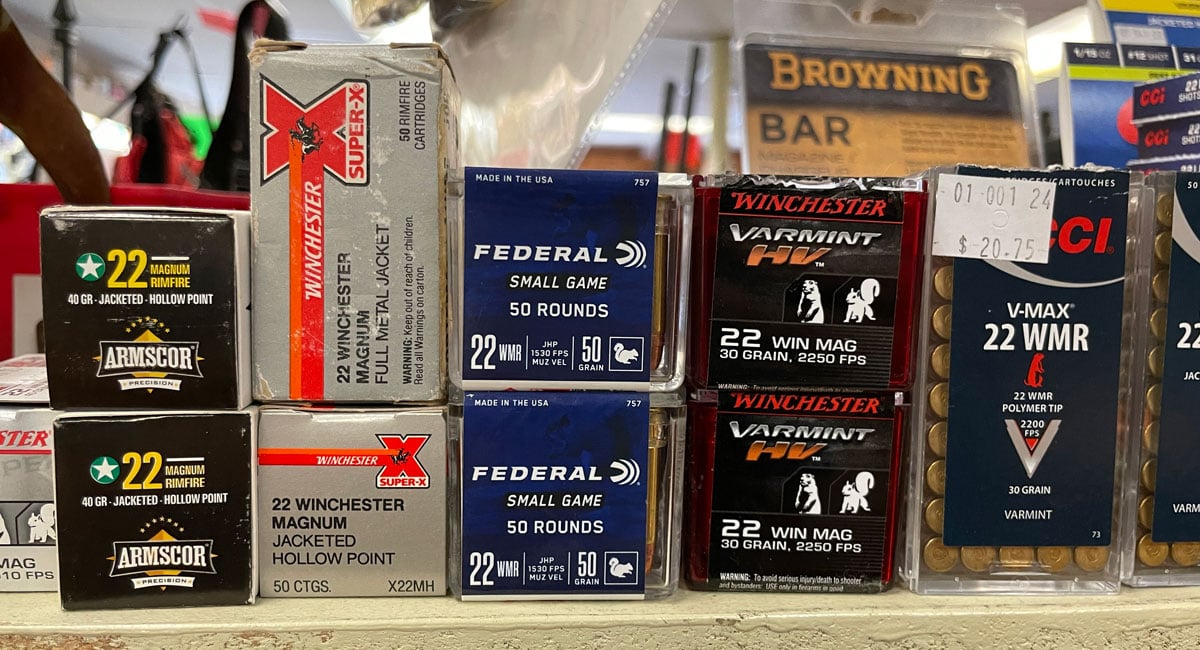
Do most shooters “need” to upgrade to a Mag? Probably not; however, it will appeal to many, and for good reason. What’s more, the .22 WMR and .22 LR work together exceptionally well in revolvers with interchangeable cylinders, giving plinkers, hunters, cowboys, and trappers the best of both worlds.
The Forgotten: .22 WRF
There’s more market confusion over this one than any other on the list. The .22 WRF is not the same as the WMR, despite sharing the same parent company. And though it appears identical to and interchangeable with the .22 Rem Special, Winchester introduced the WRF in 1890 with its familiar flat-based bullets.
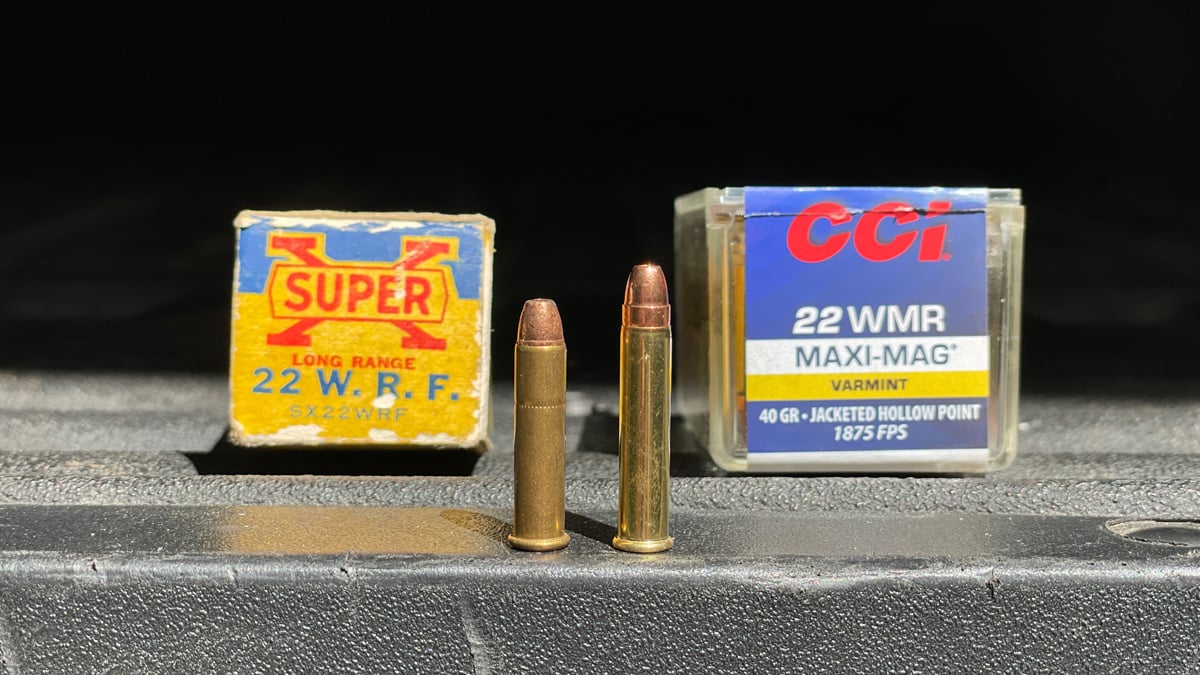
Ammunition is still produced by CCI and a handful of others, though no firearms have been built specifically for that round in as long as we can remember. Despite a promising start, advancements in smokeless powder led to lagging performance and ultimately the demise of the round, though some antique arms from Winchester, Remington, J. Stevens, and even Colt remain as fireable reminders of bygone days.
The Dominant Youngster: .17 HMR
Who knew the world was ready for another rimfire when Hornady launched the .17 HMR in 2002? The shooting and hunting world was ready and waiting. The casing is actually a necked-down .22 WMR, holding a sleek .17-caliber projectile. Keeping with the “17” trend, most bullet weights are 17 grains.
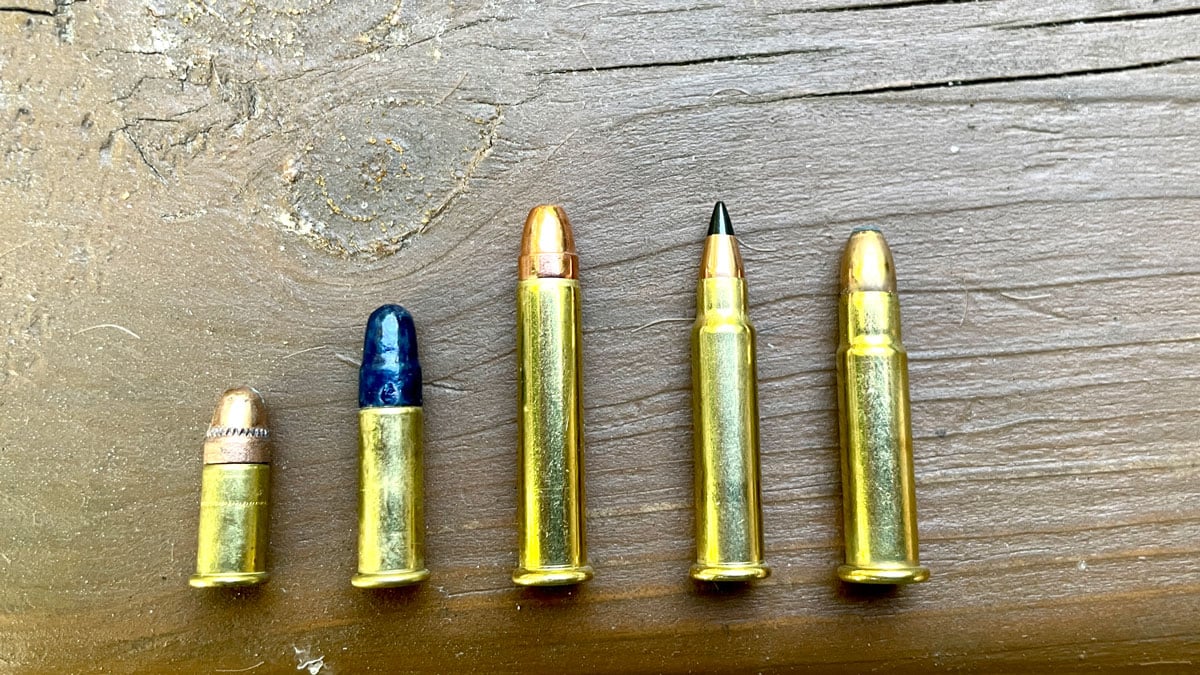
In general terms, the HMR moves faster than the WMR, extending the effective hunting range near 200 yards, in certain cases. Both rifles and ammunition remain readily available, and two decades after its inception, it appears the .17 HMR is here to stay as what we’d argue the most capable of the readily available rimfires and by far the most dominant of the .17-caliber class.
An Unpopular Speedster: .17 WSM
If nothing else, the .17 Winchester Super Magnum holds a title belt. Introduced in 2013 by powerhouse Winchester, the little WSM grabbed the title of “fastest production rimfire” from the .17 HMR, with muzzle velocity advertised at a blazing 3,000 FPS.

Stemming from a .27-caliber nail gun blank necked down to .17 caliber, the WSM is a performer, with more pressure and energy than both the .17 HMR and the .22 WMR. However, its lack of a pricey marketing push, coupled with relative scarcity of both ammunition and firearm options, has led to a slipping grasp on remaining viable on a crowded American rimfire market. Still, dedicated shooters and hunters who appreciate maximizing rimfire capabilities will cling to the .17 WSM, and for good reason.
Fizzling Fast: .17 HM2
As with the WSM above, many will argue that the .17 Mach 2 is still going strong. To be fair, you can sometimes, with a bit of treasure hunting and a pocket full of cash, find ammo for both. Though the Mach 2 name indicates otherwise, the round can’t keep pace with the WSM but is still a mover at 2,100 FPS.
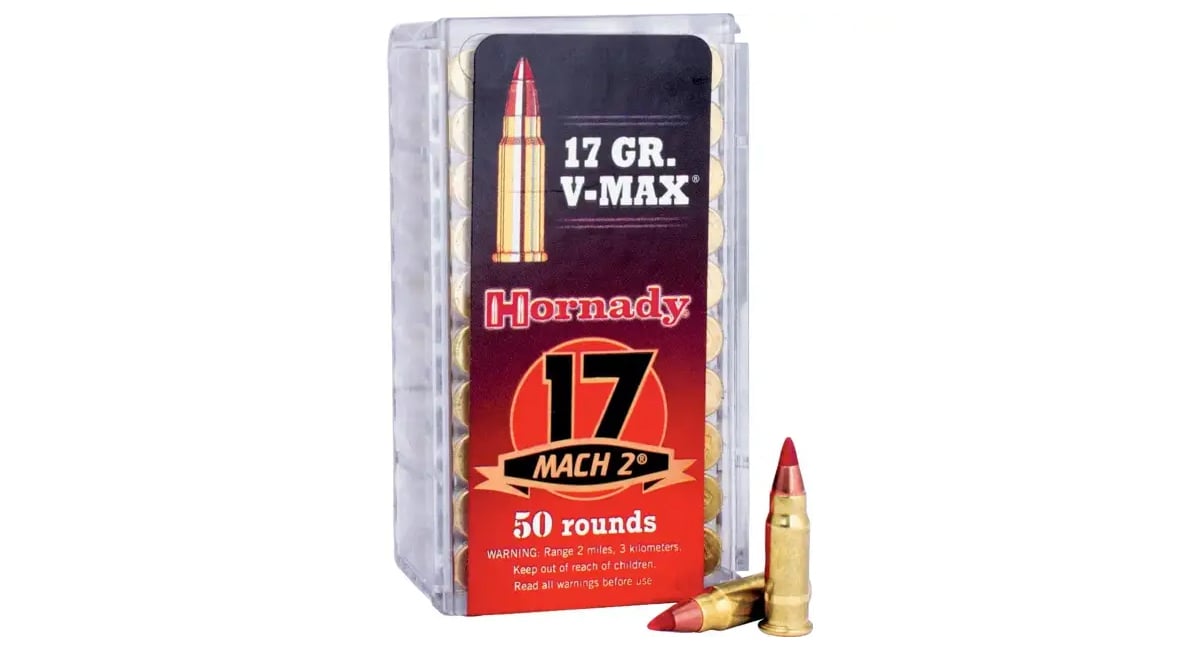
For a good number of reasons, though, it remains tucked away in the shadow of its elder brother, the .17 HMR. Both are Hornady inventions, with the HM2 launched in 2004, only two years after the company’s wildly successful .17 HMR debut. The HM2 is immediately recognizable due to its short casing, based on CCI’s .22 LR Stinger design.
Despite a strong initial push, the younger .17 faded quickly. With limited availability of both firearms and food today, the .17 HM2 remains a capable-enough little rimfire cartridge that shows impressive accuracy and a far flatter trajectory than the .22 LR. Yet, it struggles to keep pace with the .22 Magnum in energy and will always be dominated by its far more common Hornady HMR kin.
Dead but Not Buried: 5mm Rem Mag
Sometimes, a successful marketing campaign (and gun-builder cooperation) makes all the difference. On paper and in the field, Remington’s 1969 brainchild 5mm Remington Rimfire Magnum should have become a sensation, and perhaps even overtaken the .22 WMR. However, Remington dropped the ball on marketing and partnerships on this one, ultimately axing it from production in 1973 after building only two bolt-action models, one fed by tubular magazine (Model 592) and the other by dropbox (Model 591).

Related Review: 5mm Remington Rimfire Magnum – A Rimfire Revolution?
Since then, T/C single-shot rifles and handguns received barrel options, and several other companies including Ruger and Taurus were rumored to be eying a comeback that has yet to happen. One company did grab the reins, though: Aguila/Centurion – the Mexican-based ammunition company with curious Remington roots – picked up ammo production in 2008.

The little round refuses to die, but alas, here we are with less than a handful of firearms and relatively obscure ammunition. Still, if you own a 5mm Rem Mag rifle, you have a very capable small game and varmint hunting round with serious throwback appeal.