A Great Need After the Great War
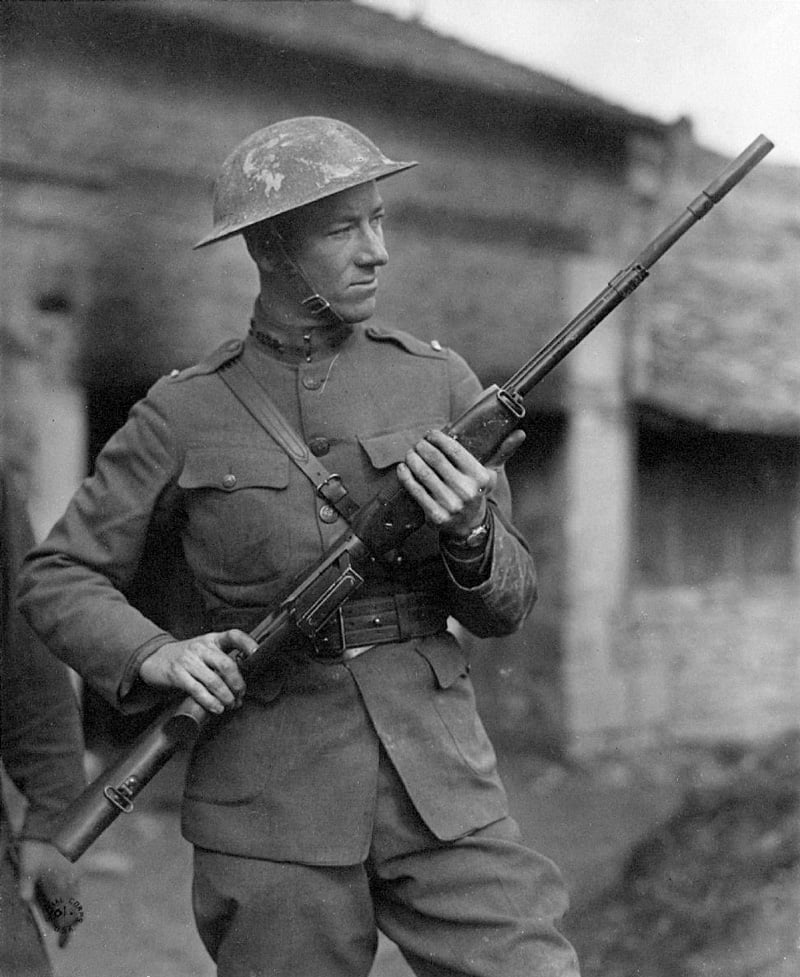
Like many nations, the British Empire went back to the drawing board on many of its standard firearms designs after World War I. The war had seen many changes to tactics and technology, and the British realized the importance of having a lighter, portable machine gun that could be carried by soldiers. This need was highlighted by the American BAR (Browning Automatic Rifle), which made a great impact in the last two months of the war.
In the early 1930s, the British began trials for a new light machine gun. This search was aimed at adopting a design to replace the more portable Lewis gun as well as the heavier mounted Vickers machine gun.
The early trials saw submissions like the Danish Madsen gun, the American BAR, and the Swiss KE7, along with one Czechoslovakian design from the Brno factory, designated the ZB. 26. The Czech design had a unique top-mounted magazine and was originally chambered for 8mm Mauser, and it was clear early on that the British acquisitions group was enamored with the Czech design.
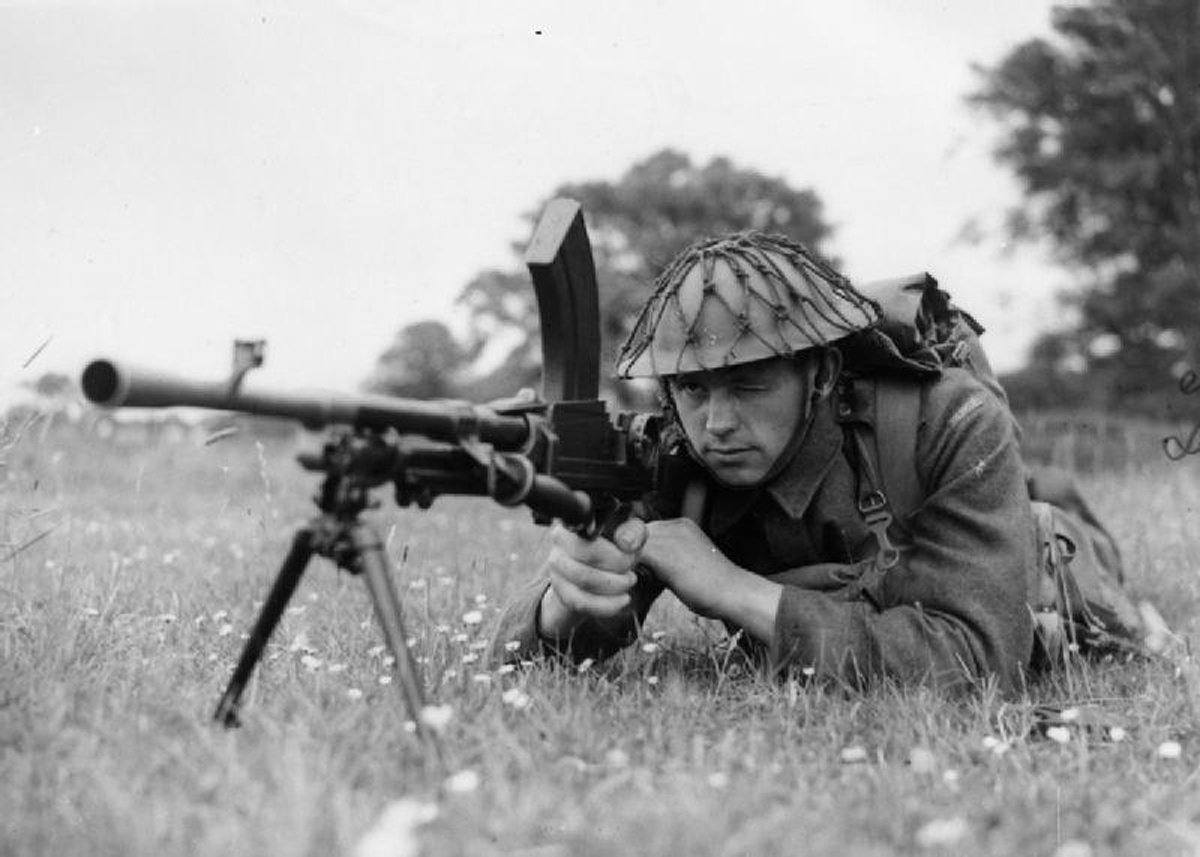
After several more trials, some minor specification changes, and the adaptation to the British .303 cartridge, the Czech design officially was adopted in 1938. This new light machine gun was designated the Bren gun, with the “Br” representing the Czech Brno factory, and the “en” signifying Enfield, the new manufacturer.
Related: All About .303 British – Cartridge Conquered Major Battlefields of 20th Century
World War II and the MkII
By 1940, 30,000 Bren guns had been manufactured and issued to British troops deployed in the defense of France. Unfortunately, by mid-1940, the British military was expelled from France at the evacuation of Dunkirk. Fewer than 2,500 Bren guns survived the defeat and continued to serve with the Brits.

Determined to revive their light machine gun, the English revisited the design of the Bren and simplified the manufacturing process. The new streamlined version was designated the Bren MkII and was built in places like the Inglis factory in Canada, preventing the Germans from disrupting production.
Ultimately, over 500,000 Bren guns were produced and served faithfully through World War II. In the 1950s when NATO adopted the 7.62x51mm cartridge, the Bren was re-barreled to continue service.

The Bren gun served England until the mid-1980s; however, many of the commonwealth nations continued to produce and employ the firearm long after it was retired from English service. In fact, in India, production of the Bren gun did not cease until the last factory retired the design in 2012.
Historic Arms Bren MkII
This Historic Arms Bren MkII is built off an Inglis kit dated 1944. The Mark II design is easy to spot, as it has a simplified butt stock and a flip-up rear ladder sight. This iteration also features a one-piece barrel with a cone flash suppressor.

The .303 British-chambered Bren gun feeds from 30-round curved magazines mounted on the top of the receiver. The magazines have ridges in the back to prevent “rim lock,” which occurs when the rim of the top round is indexed behind the rim of the cartridge below it, preventing the bolt from moving forward and picking up the next round. The magazines are accompanied by a speed loading mechanism, whereby you can stack .303 cartridges in a hopper and quickly crank them into the magazine until the magazine is full.

A tab on the barrel is easily unlocked to remove the barrel from the receiver. This allows the loader to carry spare barrels so the gunner can continue long courses of fire in a support role without melting the barrel. Each barrel is equipped with a wooden handle that can be used to carry the firearm, or extended for the support hand if there were a need to shoot the Bren from the shoulder.

The Bren is designed as a support weapon and has a built-in bipod. The bipod legs can swing forward or backward, making it easy to store. In a rather innovative fashion, the Bren features a dust cover that locks over the magazine well, preventing debris from jamming the system. There is also a sliding dust cover on the bottom of the gun to protect the bottom-mounted ejection port.
On the Range

No way would I pass up the opportunity to take this military classic to the range. The Bren is an absolute beast of a gun, weighing around 25 pounds. While designed as a “light” machine gun, it is ideal in a mounted position. This Historic Arms semi-automatic kit build was extremely well put together. All the parts not only functioned properly, but the fit and finish is incredible.


I fired most of the rounds from the bi-pod, and the weight of the gun really eliminates a lot of felt recoil. The MkII has a more open gas port (for better reliability), so the redesign added an extra recoil spring in the stock for a smoother recoil impulse. Ultimately, it feels easy to control and keep on target.


This gun is not made for saving brass. Ejection is extremely violent when mounted and chews up the empty casings, kicking them to the ground with a severe amount of force. The dinged-up casings are not exactly ready to go into the reloading pile.

The side-mounted iron sights take a moment to get used to, as the magazine really restricts your full field of view. Shouldering the Bren is quite the workout, and it is quite the task to squeeze off 30 rounds before the arms start shaking. The Carey handle makes this a perfect candidate for the ’80s hip fire. There is nothing like tucking a gun on your hip and letting loose.
Rim Lock

Even though the magazines and magazine loader are supposed to index the rims properly, I still experienced several cases of rim lock. It goes to show why the rimmed cartridge is basically a thing of the past.

The speed-loading hopper makes loading magazines fast, but I think I had rim lock on every magazine that I loaded with it. Granted, I am not trained on how to use the loader, so I suppose there could be some technical spec I am overlooking.
Final Thoughts

What a blast, though! To have a 1944 dated Bren gun in my hands – how can you top that? History was my favorite subject in school, all the way through college. But you know what beats the hell out of writing a paper on World War II? Rocking in that top-feed magazine and letting loose on some .303.